Secure Finance Services Networking Using AI-Based Blockchain Technology
Book chapter
Abstract
This abstract examines the utilization the application of blockchain technology in enhancing security of finance services networking. The merging of artificial intelligence (AI) and blockchain has opened new avenues for bolstering security in networking infrastructures. The abstract explores deeply the fundamentals of blockchain technology, emphasizing its decentralized, immutable, and transparent nature. It then discusses how AI augments blockchain networks, particularly in consensus mechanisms, smart contract execution, and anomaly detection. Leveraging the synergy between artificial intelligence (AI) and blockchain technology holds promise in addressing these challenges. The abstract initially elucidates the foundational principles of blockchain technology tailored to finance services, highlighting its decentralized ledger, cryptographic security, and smart contract capabilities. Subsequently, it scrutinizes the role of AI in enhancing various facets of finance services networking, including fraud detection, risk assessment, and transaction monitoring. The integration of AI and blockchain is then explored in depth, showcasing how these technologies collaborate to establish secure finance services networks by mitigating risks such as unauthorized access, data tampering, and fraudulent activities. Real-world case studies are presented to underscore the efficacy of AI-based blockchain solutions in optimizing financial processes while ensuring compliance with regulatory standards. Emerging trends and future directions, such as predictive analytics for threat mitigation and federated learning for data privacy, are also explored. Overall, this abstract provides insights into how AI-based blockchain technology revolutionizes secure networking, offering a comprehensive understanding of its principles, applications, and implications for cybersecurity. It concludes by synthesizing key insights and projecting the future trajectory of secure finance services networking propelled by AI-based blockchain technology, underscoring its pivotal role in reshaping the financial landscape.
An unpublished book-chapter manuscript - the full text is reproduced below, or download the PDF.
Ayush Agnihotri, Ashutosh Pandey - Department of Computer Science and Engineering, Pranveer Singh Institute of Technology, Kanpur, Uttar Pradesh, India.
Keywords: Secure Networking · AI-Based Blockchain Technology · Artificial Intelligence · Blockchain Security · Decentralization · Consensus Mechanisms
1. Introduction
The fusion of artificial intelligence and blockchain technology has captured significant interest in past years, particularly around secure networking systems. The chapter endeavours to investigate the potential of blockchain technology driven by AI and its forthcoming influence on augmenting the landscape concerning the security of networking infrastructures. Through a comprehensive examination of this intersection, we endeavour to elucidate the fundamental principles, applications, and implications of this innovative approach to secure networking.
The contemporary digital landscape is characterized by a complex network of interconnected systems, devices, and applications. While this interconnectedness has enabled unprecedented levels of communication, collaboration, and innovation, it has also exposed networking infrastructures to a myriad of cybersecurity threats and vulnerabilities. From malicious actors exploiting system weaknesses for financial gain to state-sponsored cyber espionage activities aimed at compromising national security, the challenges facing secure networking are diverse and constantly evolving (Cai, W. (2018)).
In response to these challenges, organizations and cybersecurity experts are increasingly turning to technologies such as AI and blockchain to bolster the defences of networking infrastructures. Artificial intelligence, often heralded as the cornerstone of the fourth industrial revolution, surrounding a range of computational techniques and methodologies aimed at mimicking human cognitive abilities. Machine learning, utilizes algorithms to analyse extensive datasets, identifies the patterns, and make data-driven based decisions.
1.1 Introduction to AI-Based Blockchain Technology for Secure Finance Networking
Introducing artificial intelligence into secure networking systems offers immense promise for improving detection of threats, response to Incidents, and overall cybersecurity scenario. By harnessing algorithms of machine learning, organizations can analyse network traffic patterns, detecting the anomalies which indicates malicious activity, and responds autonomously to security incidents in real time and real-world Environment. Moreover, advancements in deep learning enable the development of sophisticated intrusion detection and prevention systems capable of identifying previously unseen threats and zero-day vulnerabilities (Radziwill, 2018).
Blockchain provides a decentralized, transparent, and immutable ledger for recording transactions. Simply, blockchain is like a database which is distributed maintained by nodes present in network, each storing a copy of the ledger. Transactions documented on the blockchain are cryptographically protected and unalterable, making them impervious to tampering and resistant to unauthorized alterations. Mechanisms such as Proof of Stake (POS) or Proof of Work (POW) uphold ledger integrity by enabling nodes to unanimously validate transaction legitimacy. (Christlan, C. (2010))
Synergies Between both the technologies by amalgamating the strengths of AI and blockchain technology, organizations can create secure networking systems that are not only resilient to cyber threats but also transparent, auditable, and trustworthy. AI algorithms can analyse network data to identify suspicious activities, whereas in case of, it ensures the integrity and transparency of transaction records.
Paradigm Shift in Secure Networking The integration of AI signifies a paternal shift in secure networking conceptualization, design, and implementation. Traditionally, network security relied heavily on perimeter-based defences such as IDS and antivirus Systems or Software. However, these conventional approaches are increasingly inadequate against sophisticated cyber threats capable of bypassing perimeter defences undetected. (Christidis, K., & Devetsikiotis, M. (2016)).
AI-driven Security Solutions In contrast, AI-based approaches offer proactive and adaptive defence mechanisms that can identify the threats and stop them in real-time. Machine learning algorithms analyse extensive network data to pattern based on anomaly detection algorithm indicative of malicious activity, enabling the organizations to respond swiftly and accurately to security incidents from data breach. Moreover, AI-driven security solutions adapt themselves to evolving threat landscapes, ensuring organizations stay ahead of cyber adversaries.
Advantages of AI-based Approaches AI-based approaches provide context-aware threat detection and response capabilities, surpassing traditional security solutions reliant on predefined rules and signatures. By leveraging advanced machine learning algorithms, AI-driven security solutions analyse network traffic contextually, identifying subtle deviations indicative of security threats with high accuracy.
Additionally, these approaches automate repetitive tasks, streamline security operations, and offer advanced capabilities for threat hunting and forensic analysis, enhancing the resilience of network infrastructures. Anticipating Future Developments As AI-based blockchain technology evolves, emerging trends like predictive analytics for threat mitigation, decentralized identity management, and federated learning for data privacy shape the secure networking landscape. By anticipating these developments, organizations can proactively address evolving cybersecurity threats and leverage AI-based blockchain technology to enhance network security.
1.2 Paradigm Shift in Secure Networking
The integration of AI and blockchain signifies a paradigm shift in secure networking conceptualization, design, and implementation. Traditionally, network security relied heavily on perimeter-based defences such as IDS and antivirus systems. However, these conventional approaches are increasingly inadequate against sophisticated cyber threats capable of bypassing perimeter defences undetected.
Prediction of analytics data harnesses algorithms of AI to scrutinize historical data, uncovering patterns that might signal impending security threats. Through machine learning techniques, organizations gain the capability to anticipate and thwart cyber-attacks before they materialize, thereby fortifying the resilience of their networking infrastructures. By identifying emerging threats, zero-day vulnerabilities, and malicious activities, predictive analytics empowers organizations to proactively mitigate risks and safeguard their assets. (DAPPS 2022 Committees. (2022)).
1.3 AI-driven Security Solution
In contrast, AI-based approaches offer proactive and adaptive defence mechanisms that can identify threats and stop them in real-time within secure networking systems. Machine learning algorithms analyse extensive network data to pattern-based on anomaly detection algorithms indicative of malicious activity, enabling organizations to respond swiftly and accurately to security incidents.
1.4 Federated Learning for Data Privacy
Federated learning stands as a privacy-preserving approach in machine learning, enabling organizations to train AI models on datasets without exposing the data to external agents. Leveraging blockchain technology to facilitate secure and transparent data sharing, federated learning fosters collaboration and resource pooling among organizations while safeguarding data privacy and confidentiality. This approach holds particular significance in the realm of secure networking, where organizations must analyse extensive datasets across disparate systems without compromising privacy or security (Finck, 2018).
1.5 Interoperability and Scalability
As AI-based blockchain technology proliferates across diverse industries and applications, interoperability and scalability become critical considerations. Interoperability standards enable seamless integration and communication. By addressing interoperability and scalability challenges, organizations can leverage the full potential of AI-based blockchain technology in secure financial networking. (Di Angelo, M., & Salzer, G. (2020))
1.6 Regulatory Compliance and Governance
As AI-based blockchain technology expands across various industries and applications, interoperability and scalability emerge as pivotal considerations. Standards for interoperability plays an important role in enabling seamless integration and communication among diverse blockchain networks. These standards facilitate efficient data exchange and collaboration, fostering interoperability across different platforms.
Unlocking the Full Potential By addressing interoperability and scalability challenges, organizations can use the full potential of AI-based blockchain technology in secure networking. Seamless interoperability and enhanced scalability enable blockchain networks to enhance growing user bases and volume of transaction, supporting the adoption of secure networking solutions across various industries.
1.7 Education and Awareness
As AI-based technology continues to evolve, education and awareness emerge as pivotal factors in fostering adoption and driving innovation. Organizations should invest in comprehensive programs for training, certifications, and knowledge-sharing initiatives for equipping the employees with the requisite skills and expertise needed to effectively leverage AI-based blockchain technology.
Empowering Employees with Skills and Expertise By prioritizing education and training, Organizations becomes proficient in harnessing the capabilities of AI-based blockchain technology. These initiatives empower employees to navigate complex implementations and unlock the existing potential of these transformative technologies.
Raising Awareness and Building Trust In addition to internal education efforts, raising awareness about the benefits, challenges, and best practices of AI-based blockchain technology is important. Stakeholders and the public must be informed about the potential applications and implications of these technologies. This proactive approach fosters trust and confidence in AI-based blockchain solutions, driving broader adoption and facilitating collaborative innovation. (DAPPS 2022 Committees. (2022)).
1.8 Collaboration and Ecosystem Development
Collaboration and ecosystem development stand as pivotal drivers of innovation and growth in the AI-based blockchain space. Organizations must foster partnerships, consortia, and industry alliances to accelerate research, development, and adoption of AI-based blockchain solutions. By collaborating with peers, academia, and technology providers, Organizations can utilize combined expertise and resources to tackle shared challenges, explore new use cases, and drive standards and interoperability in the secure networking domain.
1.9 Anticipating Future Developments
As AI-based blockchain technology evolves, emerging trends like predictive analytics for threat mitigation, decentralized identity management, and federated learning for data privacy shape the secure networking landscape. By anticipating these developments, organizations can proactively address evolving cybersecurity threats and leverage AI-based blockchain technology to enhance network security.
Revolutionizing Secure Networking Systems, AI and blockchain technology possesses significant potential for transforming secure networking systems. By harnessing the complementary strengths of AI and blockchain technology, organizations can establish resilient, transparent, and trustworthy networking infrastructures, effectively mitigating cybersecurity threats and safeguarding critical assets. Emerging trends such as predictive analytics, decentralized identity management, and federated learning offer innovative approaches to enhancing the security and privacy of networking infrastructures. By embracing these trends and anticipating future developments, organizations can stay ahead of evolving cybersecurity concerns and uses AI-based blockchain technology to build secure, resilient, and future-proof networking infrastructures.
In conclusion, the integration of both the technologies signifies a shift in the security landscape. By leveraging the strengths of AI and blockchain technology, organizations can establish secure networking systems that are resilient, transparent, and trustworthy. AI-driven approaches to network security provide advanced capabilities for threat detection, incident response, and forensic analysis, empowering organizations. Moreover, blockchain technology provides a decentralized and unchangeable environment for documenting transactions, ensuring the integrity and transparency of network operations. By amalgamating the inherent strengths of AI and blockchain technology, organizations can fortify networking systems capable of withstanding the ever-evolving threat landscape and safeguarding critical assets from cyber adversaries (Gandhi et al., 2020).
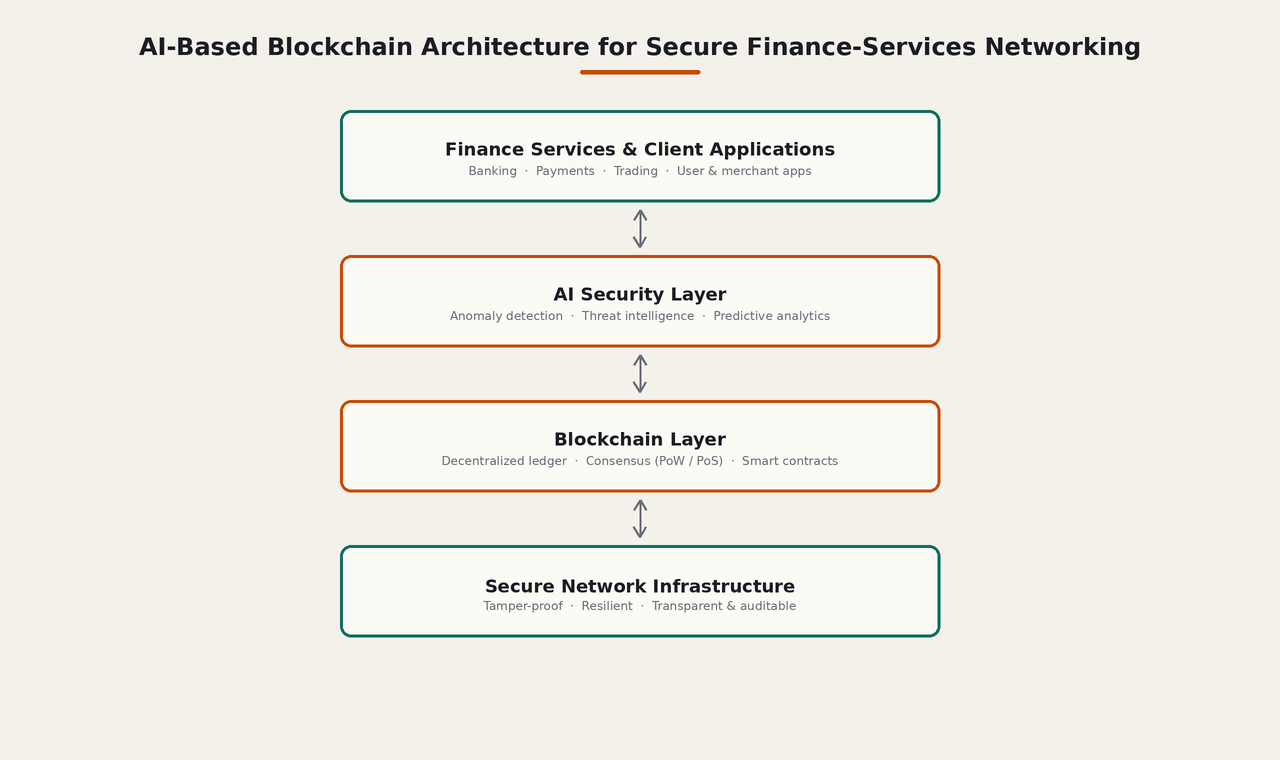
2. Foundations of Blockchain Technology in Finance Services Networking
Blockchain has emerged as a transformative force around secure networking systems, which offers decentralized, immutable, and transparent solutions to a myriad of challenges. In this section we will explore the foundational principles that underpin blockchain technology, providing an in-depth exploration of its decentralized ledger structure, consensus mechanisms, and smart contract capabilities. By comprehensively understanding these foundational elements, stakeholders in secure networking systems, thus making the way for the development of robust and resilient network infrastructures.
2.1 Decentralized Ledger Structure
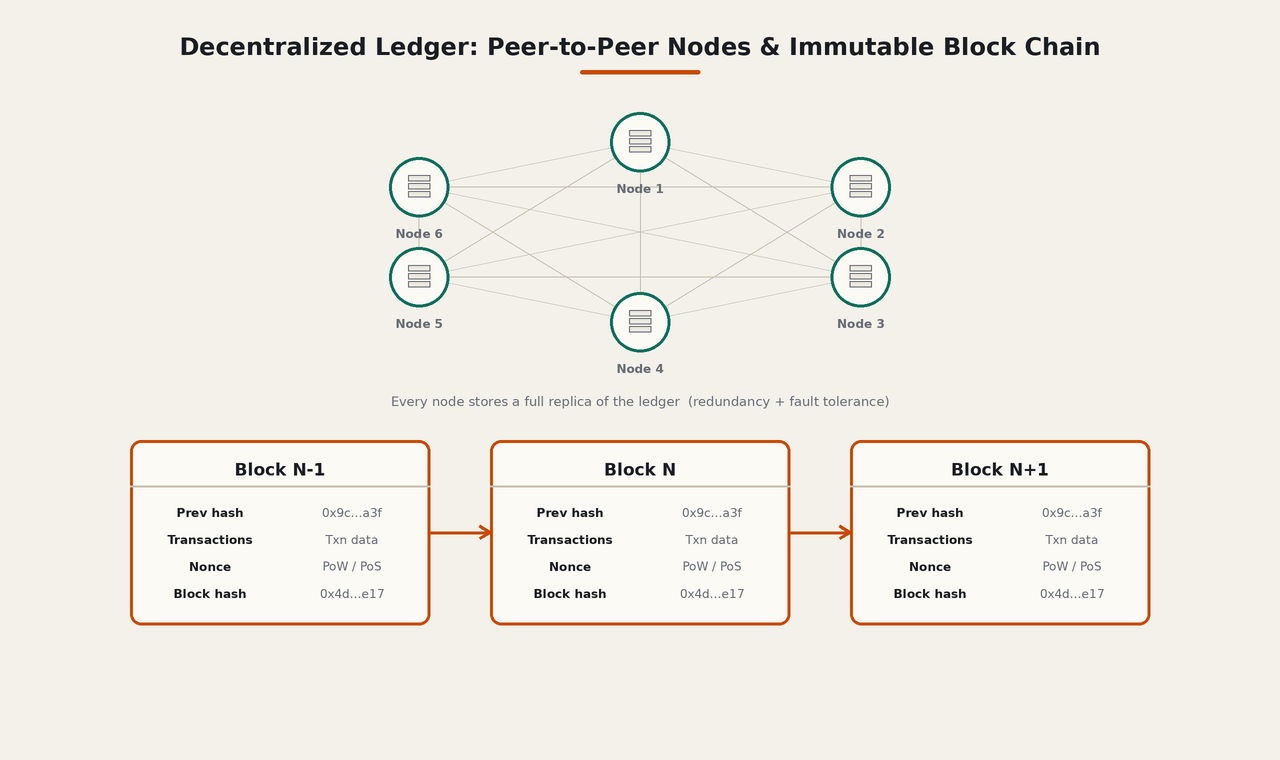
At the core of blockchain technology lies its decentralized ledger structure, which fundamentally disrupts the traditional paradigm of centralized data management. Unlike conventional databases reliant on a sole central authority for data storage and validation, blockchain networks distribute transaction data across an interconnected nodal network. Every node preserves a full replica of the ledger, guaranteeing redundancy and fault tolerance across the network. This decentralized architecture mitigates the risk of single points of failure and malicious tampering, thereby enhancing the overall resilience and integrity of the network (Drescher, 2017).
Furthermore, the decentralized blockchain network fosters a peer-to-peer (P2P) communication model, where transactions are broadcasted and validated by multi nodes within the network. As elaborated in the subsequent section, blockchain networks enable nodes to collectively agree upon the transactions, ensuring the consistency and immutability of the system. By decentralizing data management and transaction validation, blockchain technology cultivates trust, transparency, and accountability within secure networking systems.
2.2 Consensus Mechanisms
Consensus mechanisms act as the foundation of blockchain networks, enabling nodes to collectively validate and agree upon the order and validity of transactions within finance services networking. These mechanisms are pivotal in maintaining the integrity and security of the blockchain ledger, particularly in decentralized environments where trust among network participants is paramount.
2.3 Decentralization and Resilience
The decentralized ledger structure not only enhances redundancy and fault tolerance but also significantly contributes to the resilience of secure networking systems. Unlike traditional centralized systems that are susceptible to centralised failure point, where the compromise of a central authority can lead major disruptions, it distributes data across a network. This distribution makes the system more resilient to attacks, guaranteeing the continuity of operations even in the event of node failures or malicious activities. Once a transaction entry is logged on the blockchain, it becomes immutable as it is saved on centralised system, meaning it cannot be deleted or updated. This feature provides an irrefutable audit trail of all network activities, which is valuable in scenes where integrity of data and transparency are paramount. Industries such as financial transactions, supply chain management, and healthcare recordkeeping benefit greatly from this capability. (Cai, 2018).
2.4 Enhanced Security
Blockchain technology provides robust security features that effectively mitigate risks associated with data tampering, unauthorized access, and cyber-attacks within the finance sector. Techniques, including digital signatures and hashes, play a crucial role in securing transactions and protecting sensitive information. Digital signatures authenticate the identity of transaction participants, while hash functions ensure the integrity of information by generating unique, fixed-size cryptographic hashes for each transaction.
Furthermore, these type of mechanism plays a very important role in maintaining the overall security and integrity of the blockchain systems. These mechanisms guarantee that only legitimate transactions approved by the network are added to the blockchain, thereby safeguarding against fraudulent activities and preserving the integrity of the record. Through decentralized consensus protocols such as Proof of Work (POW) and Proof of Stake (POS), blockchain networks achieve consensus among network participants, enhancing security and trust in the system (Cai, 2018).
2.5 Transparent Governance
Blockchain networks commonly operate under transparent governance models, where rules and protocols are openly defined and enforced through consensus mechanisms. The transparency caters trust among the network participants, as they can autonomously verify the authenticity of transactions and the adherence to network rules. Moreover, transparent governance promotes accountability and reduces the potential for disputes or conflicts among stakeholders within secure networking systems.
The transparent nature of blockchain governance ensures that decisions and actions taken within the network are visible to every participant. This encourages trust through permitting stakeholders to understand how the network operates and to assess its integrity. Furthermore, transparent governance promotes accountability, as participants are held accountable for their actions and decisions within the network. This reduces the likelihood of error prone behaviour and enhances the overall scenario of security of the system.
2.6 Interoperability and Scalability
Interoperability between blockchain networks and legacy systems is paramount for seamless integration into existing secure networking infrastructures. Standards such as cross-chain communication protocols and interoperability frameworks play a pivotal role in facilitating interoperability. These standards enable data and assets to flow seamlessly between different blockchain platforms and traditional networks, ensuring smooth operation and compatibility.
Scalability is a major challenge for the Apps which uses blockchain technology, especially in the context of secure networking systems where high throughput and low latency are crucial. To address this challenge, various solutions are being developed. Sharding, for instance the software into smaller, more manageable segments, allowing for processing parallelly of transactions and enhancing scalability. Layer-two scaling solutions, on the other hand, facilitate off-chain transactions, alleviating congestion on the primary blockchain and enhancing scalability. Additionally, optimized consensus algorithms are being researched and implemented to enhance throughput and efficiency in secure networking environments.
2.7 Regulatory Compliance
Compliance with the regular requirements is paramount for secure networking systems operating within regulated industries such as finance, healthcare, and government. Blockchain technology presents both challenges and opportunities in regulatory compliance, particularly concerning data privacy, identity management, and transaction reporting.
Blockchain technology introduces new challenges in regulatory compliance, such as ensuring data privacy and complying with identity management regulations. However, it also offers opportunities to streamline compliance processes and enhance transparency and accountability.
To ensure compliance while harnessing the benefits of blockchain technology, various solutions are being explored. Privacy-preserving techniques, such as zero-knowledge proofs and homomorphic encryption, help protect sensitive data while ensuring compliance with data privacy regulations. Identity verification protocols, such as decentralized identity management systems, enable secure and compliant identity verification processes.
2.8 Environmental Sustainability
The energy consumption for consensus mechanisms, particularly the Proof of Work, has raised significant concerns regarding environmental sustainability. As secure networking systems increasingly adopt blockchain technology, there is a growing emphasis on developing eco-friendly mechanisms and blockchain architectures which are energy efficient.
To address these concerns, transitioning to more sustainable consensus algorithms has become imperative. Alternatives like Proof of Stake, Proof of Authority, or Delegated Proof of Stake present promising solutions to decrease the footprint of blockchain networks while upholding decentralized ledger security.
By adopting these eco-friendly consensus mechanisms, secure networking systems can significantly mitigate their environmental impact without compromising on security or decentralization. This transition represents a crucial step towards achieving environmental sustainability in blockchain technology adoption.
2.9 Smart Contract Capabilities
Smart contracts play a vital innovation within blockchain technology, facilitating the implementation of self-enforcing agreements without the need for people who act as intermediaries or trusted third parties. These programmable scripts reside on the blockchain and autonomously execute earlier set actions when given conditions are met, typically encoded using simple if-then logic. This enables the automation and enforcement of contractual obligations in a transparent manner.
The key advantages of smart contracts is ability to enable trust less interactions between parties, where contractual agreements are executed autonomously based on predetermined conditions. This eliminates the need for intermediary's person or organisations such lawyers, banks or escrow agents, resulting in reduced transaction costs, minimized risk of fraud, and expedited settlement processes. Furthermore, smart contracts remain immutable once they are deployed on the blockchain, ensuring the integrity and security of contractual agreements.
Additionally, smart contracts strengths the development of (DApps) that leverage blockchain technology to offer a diverse area of functionalities, including decentralized finance and the supply chain management, digital identity verification, and various other applications. By harnessing the programmability and automation capabilities of smart contracts, developers can create innovative solutions that are transparent, auditable, and resistant to censorship or manipulation.
In conclusion, blockchain technology encompasses decentralized ledger structures, consensus mechanisms, and smart contract capabilities. Through decentralized ledger structures, transaction data is distributed across interconnected nodes, fostering redundancy and tolerance of fault. Consensus mechanisms ensure the integrity and security of the blockchain ledger by enabling nodes to validate and agree upon the validity of transactions. Smart contracts facilitate the execution of self-enforcing contractual agreements, automating and enforcing contractual obligations transparently and immutably. By comprehensively understanding these foundational elements, stakeholders in secure networking systems can secure the transformative potential of blockchain technology to create robust, resilient, and trustworthy network infrastructures.
3. Role of AI in Finance Services Networking
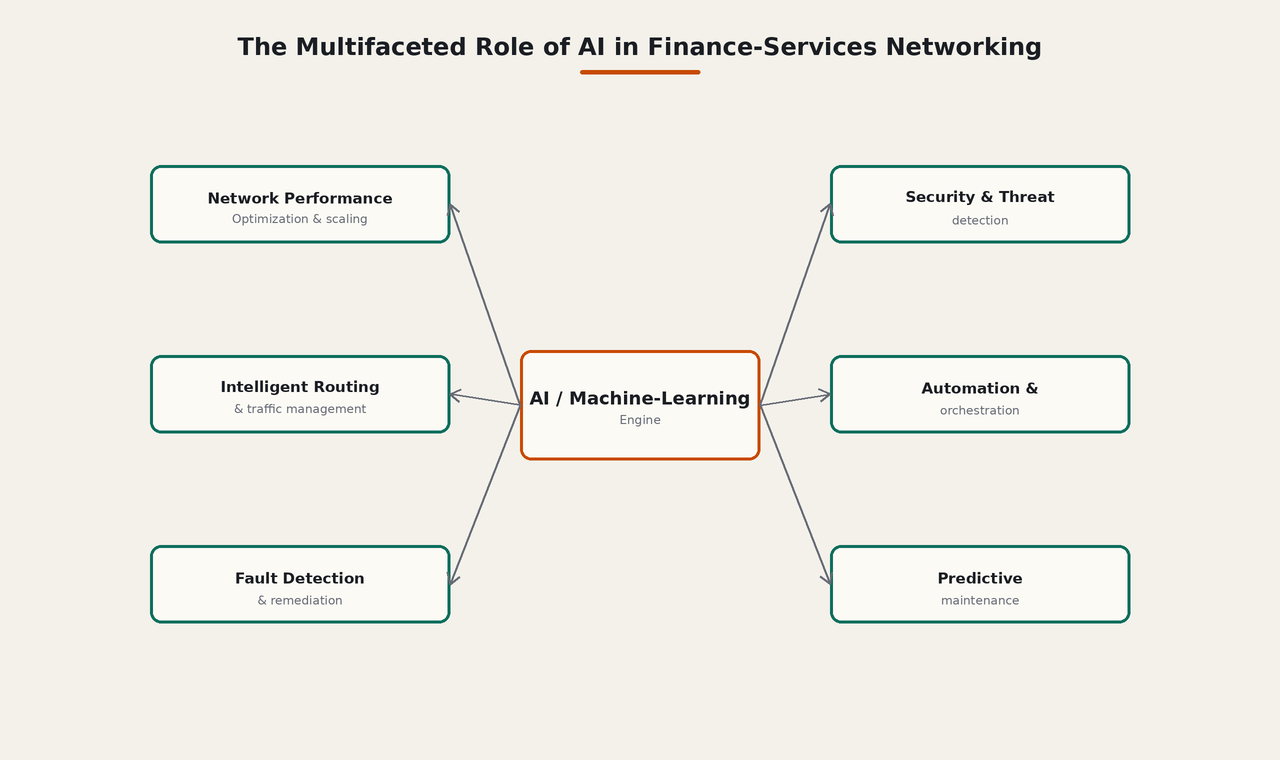
In the contemporary landscape of financial services, the integration of artificial intelligence into networking systems has become indispensable. AI technologies encompass a broad spectrum of methodologies, plays a crucial role in enhancing network performance enhancing security measures, and streamlining network management tasks within the finance sector.
This section provides a comprehensive exploration of the multifaceted role of AI in finance services networking. It elucidates how machine learning algorithms, predictive analytics, and automation mechanisms contribute to the efficiency, resilience, and security of network infrastructures within financial institutions. By leveraging AI technologies, finance services networking systems can achieve enhanced performance, advance threat detection, and streamline management processes, ultimately leading to improved user experiences and operational efficiencies.
3.1 Optimizing Network Performance
The primary functions of AI in networking is to optimize network performance by leveraging machine learning algorithms. These algorithms analyse network data, identify patterns, and make data-driven decisions to enhance network efficiency.
By analysing historical network data, the algorithms of artificial intelligence and machine learning we can identify trends, anomalies, and performance analyis can be done based on this data. This facilitates proactive optimization and allocation of resource, ensuring that network resources are efficiently utilized, and performance bottlenecks are addressed before they impact user experience. Ultimately, AI-driven optimization enhances network efficiency, reliability, and scalability.
3.2 Dynamic Network Provisioning and Scaling
AI-driven networking solutions enable the scaling of network resources based on real-time demand and workload requirements within financial institutions.
Through the analysis of historical usage patterns and prediction of future resource needs, machine learning algorithms empower networks to scale up or down automatically. This adaptability ensures optimal resource utilization and enhances scalability and agility in finance services networking infrastructures.
Furthermore, AI-powered Quality of Service (QoS) optimization mechanisms prioritize network traffic based on application requirements, user preferences, and business priorities. By dynamically classifying and prioritizing network traffic, AI algorithms ensure that critical applications receive adequate bandwidth and low latency while optimizing resource allocation for non-critical applications.
By optimizing QoS parameters, AI-driven solutions enhance user experience, reduce latency, and ensure consistent performance across finance services networks. This proactive approach to resource management and traffic prioritization results in improved efficiency, reliability, and satisfaction for network users within the finance sector.
3.3 Intelligent Network Routing and Traffic Management
AI-driven routing algorithms play a major role in optimizing network traffic making routing decisions according to real-time network conditions, congestion levels, and performance metrics. By leveraging machine learning models, these algorithms analyse traffic patterns and predict optimal routing paths to minimize latency, reduce packet loss, and enhance overall network efficiency.
Furthermore, AI-powered traffic management solutions dynamically adjust traffic policies and route traffic through the most efficient paths. It ensures the utilization of network conditions and mitigates congestion-related issues. By continuously monitoring network conditions and adapting routing decisions in real-time, AI-driven solutions optimize network performance and deliver a seamless user experience.
3.4 Proactive Network Fault Detection and Remediation
AI-based fault detection and remediation mechanisms proactively identify and address network faults, errors, and performance degradations before they can impact the experience of users or service availability of the network. Using algorithms of machine learning, these mechanisms analyse network telemetry data to identify behaviour and correlate events to detect potential issues or vulnerabilities.
AI-driven diagnostic tools play a pivotal role in diagnosing the root causes of network problems. They recommend remediation actions and automate the resolution process to minimize downtime and service disruptions. By automating fault detection and remediation, AI-driven solutions enhance network reliability and resilience, ensuring uninterrupted service delivery and optimal user experience.
3.5 Cognitive Network Management and Optimization
Cognitive networking harnesses AI and machine-learning techniques to develop self-learning and self-optimizing networks that continuously adapt to environmental changes and user requirements. These networks leverage cognitive network systems to analyse vast amounts of network data, learning from past experiences to proactively optimize network configurations, policies, and operations.
By mimicking human cognition and decision-making processes, cognitive networking enables networks to become more intelligent, adaptive, and resilient to dynamic and unpredictable conditions. This approach allows networks to autonomously adjust to changing environments, anticipate potential issues, and optimize performance in real-time, ultimately enhancing user experience and network efficiency.
3.6 Predictive Maintenance and Reliability Engineering
AI-driven predictive maintenance techniques utilize machine learning algorithms to analyse equipment telemetry data. They identify patterns of degradation or failure and predict impending equipment failures before they occur. By monitoring key performance indicators (KPIs) and early warning signs, predictive maintenance systems can proactively schedule maintenance activities, replace or repair faulty components, and prevent costly downtime or service disruptions.
Moreover, AI-powered reliability engineering solutions optimize equipment lifecycle management and improving overall network reliability and availability.
Intent-based networking uses AI and machine learning to translate high-level business objectives and user requirements into network policies and configurations automatically. IBN systems capture user intent, analyse network context, and dynamically configure network devices and services to align with user intent. By automating policy enforcement, provisioning, and verification, IBN simplifies network operations, reduces human errors, and ensures consistent policy enforcement across the network. (Hewa, T., Ylianttila, M., & Liyanage, M. (2021))
3.7 Augmented Network Operations and Decision Support
AI-powered decision support systems provide network administrators with actionable insights, recommendations, and predictions to facilitate decision-making. Through the analysis of complex network data, machine learning algorithms identify optimization opportunities and offer recommendations for performance tuning, capacity planning, and risk mitigation. By augmenting human intelligence with AI-driven insights, decision support systems enhance network operational efficiency, accelerate troubleshooting, and optimize resource utilization.
Moreover, AI-driven predictive analytics play an important role in anticipating network congestion and optimizing allocation of resource to ensure efficient network operation. Techniques such as time series forecasting, regression analysis, and anomaly detection enable network administrators to forecast future network traffic, predict capacity requirements, and pre-emptively allocate resources to mitigate potential bottlenecks. Leveraging historical performance data and machine learning models, predictive analytics empower organizations to optimize network utilization, reduce latency, and enhance user experience.
Moreover, AI-driven network optimization solutions utilize simulated annealing to dynamically adapt network parameters and configurations in response to evolving traffic patterns and environmental conditions. These adaptive optimization mechanisms enable networks to self-regulate and self-optimize, ensuring optimal performance and resource utilization in dynamic and heterogeneous environments.
3.8 Enhancing Security Measures
In addition to optimizing the performance of the network, AI plays a very major role for enhancing security measures within networking infrastructures. These algorithms can analyse network data to identify patterns and anomalies suggestive of malicious activity, facilitating proactive threat detection and mitigation. AI-powered security solutions can recognize and categorize various types of cyber threats including phishing attacks and other threats.
Furthermore, AI-driven security platform leverages advanced data mining and machine learning techniques to analyse large volumes of security data from different sources across the network. By correlating and contextualizing security data, these platforms provide comprehensive visibility into network security posture, enabling organizations to identify vulnerabilities, prioritize security incidents, and respond to threats promptly. Moreover, AI-driven security analytics platforms can identify emerging threats, enabling organizations to pre-emptively implement security controls to mitigate risks or threats.
3.9 Automation and Orchestration
In addition to optimizing network performance and enhancing security measures, AI plays a crucial role in automating and orchestrating network management tasks. Automation and orchestration mechanisms leverage AI-driven algorithms to streamline network provisioning, configuration management, troubleshooting, and maintenance activities, reducing human errors and it enhances overall efficiency. By automating routine and repetitive tasks, AI-driven network management solutions enable network administrators to focus their time and resources on strategic initiatives and value-added activities. (Hewa, T. M., Hu, Y., Liyanage, M., Kanhare, S. S., & Ylianttila, M. (2021))
Moreover, AI-powered network orchestration platforms employ machine learning algorithms to dynamically allocate network resources, optimize traffic routing. These adaptive orchestration mechanisms enable networks to self-adjust and self-optimize, ensuring optimal performance and reliability in dynamic and heterogeneous environments. Furthermore, AI-driven network automation solutions integrating it with existing network management systems and orchestration frameworks, enabling seamless operability and integration with heterogeneous network infrastructures. (Zou, W., Lo, D., Kochhar, P. S., Le, X.-B. D., Xia, X., Feng, Y., Chen, Z., & Xu, B. (2021))
In conclusion, AI plays a multifaceted role in networking, encompassing optimization of network performance, enhancement of security measures, and automation of network management tasks. These algorithms analyse network data to identify the patterns and anomalies, enabling proactive optimization and resource allocation. Predictive analytics anticipate network congestion and optimize resource allocation, ensuring efficient network operation. Automation and orchestration mechanisms streamline network management tasks, reducing human errors and enhancing overall efficiency. By leveraging AI-driven technologies, organizations can create resilient, secure, and efficient network infrastructures that meet the demands of modern digital ecosystems.
4. Integrating AI and Blockchain for Secure Finance Services Networking
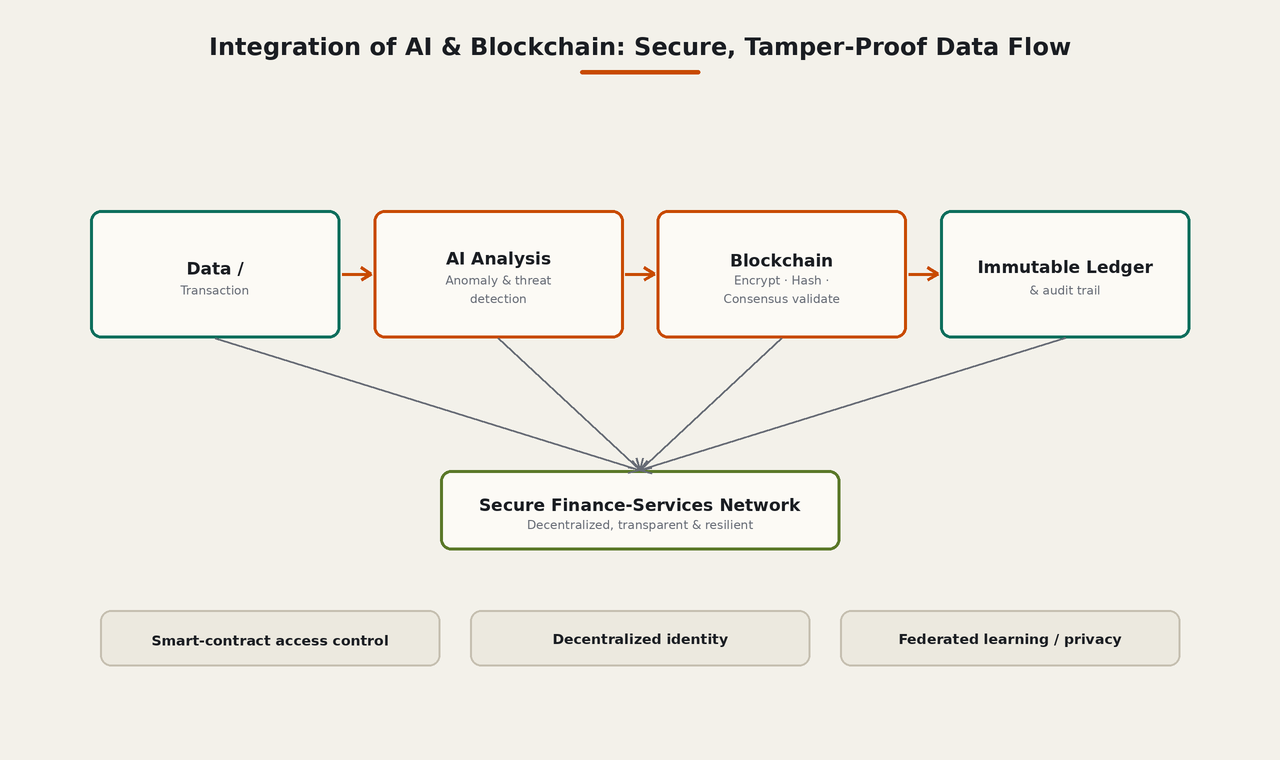
The integration of artificial intelligence (AI) and blockchain technology represents a significant advancement in the realm of secure finance services networking. By combining the capabilities of AI with the inherent security features of blockchain, organizations can strengthen their network guard against a broad spectrum of cybersecurity threats. This section explores the various mechanisms through which the integration of AI and blockchain enhances network security.
One key aspect is decentralized identity management, where blockchain technology enables users to control and manage their identity data. By decentralizing identity verification and authentication processes, organizations can enhance privacy, security, and user control over personnel data, fortifying against the risk of identity theft and unauthorized access.
Moreover, the integration of AI and blockchain ensures tamper-proof data communication. Through blockchain's distributed ledger structure, data transactions are cryptographically secured and immutable, making them impervious to tampering or unauthorized alterations. This ensures the integrity and authenticity of exchanged data within the network.
Additionally, smart contracts on blockchain networks facilitate secure data sharing. These contracts are self-executing and automatically enforce predefined agreements and rules, ensuring transparent and immutable transactions. By leveraging smart contracts, organizations can establish trust less and auditable data exchanges while eliminating the need for intermediaries.
4.1 Decentralized Management of Identity
Identity management stands as a critical pillar of network security, ensuring that only authorized users can access it sensitive resources and data. Traditional systems rely on centralized authorities like identity providers or authentication servers for user verification, posing vulnerabilities to vulnerabilities for data breaches.
Blockchain technology presents a decentralized and transparent framework for identity management, alleviating risks tied to centralized systems. Through blockchain-based solutions, users establish self-sovereign identities, cryptographically secured and tamper-proof. Each user maintains control over their identity data, stored in the blockchain in digital certificates or attestations. (Khan, M., & Naz, T. (2021))
Moreover, blockchain-based solutions offer secure and verifiable authentication without intermediaries. Users validate their identity to third parties by presenting cryptographic proofs from the blockchain, eliminating reliance on traditional authentication methods. This decentralized approach bolsters security, privacy, and user autonomy over data, diminishing risks of identity theft and unauthorized access in secure networking environments.
4.2 Tamper-Proof Data Communication
Data integrity stands as a cornerstone of secure finance services networking environments, safeguarding the confidentiality, integrity, and availability of critical information. Traditional communication protocols, reliant on centralized servers or intermediaries, are susceptible to man-in-the-middle attacks, data breaches, and tampering.
Blockchain technology provides a tamper-proof framework for data communication, guaranteeing the integrity and authenticity of transmitted data. Employing cryptographic hashing and digital signatures, blockchain-based protocols verify data integrity at each transmission stage. Data packets undergo encryption, hashing, and timestamping before integration into the blockchain, rendering tampering virtually impossible. Additionally, blockchain protocols leverage consensus mechanisms to authenticate data transmissions, fortifying security and trust in network communications.
Data sharing, fundamental in finance services networking, often encounters issues like centralization, opacity, and security vulnerabilities. Blockchain presents a solution through self-executing agreements, smart contracts enforcing predefined rules when specific conditions are met. Organizations utilize smart contracts to facilitate secure and automated data sharing, enforce access control policies, and ensure data privacy.
The amalgamation of AI and blockchain enables advanced threat detection and mitigation strategies. AI algorithms analyse extensive network data to detect complex patterns and anomalies indicative of sophisticated cyber-attacks, including polymorphic malware and zero-day exploits. By leveraging machine learning models trained on historical data, organizations proactively detect and neutralize emerging threats before causing significant damage.
Moreover, AI-powered threat intelligence platforms continuously monitor global threat landscapes, analyse threat actor tactics, and provide real-time insights into evolving threats in the cyber world. By correlating and aggregating threat intelligence information from various sources, organizations enhance situational awareness and pre-emptively defend against emerging cyber threats.
4.3 Dynamic Access Control and Privilege Management
The integration of AI and blockchain brings about dynamic access control and privilege management mechanisms, significantly enhancing security and securing from the risk of unauthorized access to sensitive resources. AI-powered access control systems leverage contextual things such as user behaviour, device posture, and network conditions to dynamically adjust access permissions. Through continuous analysis of user activities and risk indicators, AI algorithms adapt access control policies in real-time, thwarting unauthorized access attempts and mitigating insider threats.
Furthermore, blockchain-based identity management solutions play a very important role in facilitating access control and privilege management through smart contracts. These contracts enforce access control policies based on predefined rules and conditions, ensuring that only authorized users with requisite permissions can access sensitive assets. By cryptographically enforcing access control policies on the blockchain, organizations fortify their defences against unauthorized data access, reduces the likelihood of data breaches, and uphold compliance with requirements. (Di Angelo, M., & Salzer, G. (2020))
4.4 Immutable Forensic Analysis and Incident Response
The integration of blockchain technology bolsters security measures by introducing dynamic access control and privilege management mechanisms. AI-powered access control systems utilize contextual factors like user behavior, device posture, and network conditions to dynamically adapt access permissions. Through continuous analysis of user activities and risk indicators, AI algorithms adapt access control policies in real-time, thwarting unauthorized access attempts and mitigating insider threats.
In case of data breach, the integration of AI and blockchain enables immutable forensic analysis and incident response capabilities. Blockchain-based immutable audit trails meticulously record all transactions and activities on the network in a tamper-proof and transparent manner, providing a comprehensive record of security-related events. By leveraging blockchain-based audit trails, organizations can conduct forensic investigations, trace the root cause of these incidents, and analyse the impact of attacks with precision and transparency. (Wright, A., & De Filippi, P. (2015))
AI-driven forensic analysis tools can scrutinize blockchain-based audit trails, identify patterns of suspicious behaviour, and correlate disparate data sources to reconstruct the timeline of security events. By applying these algorithms to historical data, organizations can uncover hidden patterns, detect indicators of compromise, and identify the techniques, tactics employed by threat actors. This enables organizations to respond to security incidents such as data breach effectively, mitigate the impact of cyber-attacks, and enhance overall incident response readiness.
Furthermore, blockchain-based identity management solutions play an important role in facilitating fine-grained access control and privilege management through smart contracts. These contracts enforce access control policies based on predefined rules and conditions, ensuring that only genuine users with requisite permissions can access sensitive data. By cryptographically enforcing access control policies on the blockchain, organizations fortify their defenses against unauthorized data access, reduce the likelihood of data breaches, and uphold compliance with requirements. (Di Angelo, M., & Salzer, G. (2020))
5. Trends and Future Directions in AI-Based Blockchain Technology for Secure Finance Service Networking
As the integration of AI and blockchain technology continues to progress and evolve, new trends and future directions emerge, significantly shaping the landscape of secure networking. This section delves into the evolving trends and potential advancements in AI-based blockchain technology, encompassing various aspects such as predictive analytics for threat mitigation, decentralized identity management, and federated learning for enhanced data privacy. By anticipating these developments, organizations can take proactive measures to address emerging cybersecurity challenges and leverage AI-based blockchain solutions to fortify the security and resilience of their networking infrastructures.
5.1 Predictive Analytics for Threat Mitigation
An emerging trend in AI-based blockchain technology for secure finance services networking is the utilization of predictive analytics for threat mitigation. Leveraging machine learning algorithms and artificial intelligence, predictive analytics analyses historical data, identifies patterns, and forecasts future events or outcomes. In the context of secure networking, predictive analytics can anticipate cybersecurity threats, detect anomalies in network traffic, and mitigate potential risks before they escalate into full-fledged attacks.
By harnessing AI-based predictive analytics, organizations can gain valuable insights into network traffic behaviour, identify deviations from normal patterns, and predict potential security breaches or cyber-attacks. For example, machine learning algorithms can analyse network logs, system behaviour, and activity to identify indicators of compromise (IOCs) or suspicious activities signalling security threats. By detecting anomalies in real-time and correlating various data sources, predictive analytics empowers security teams to take early measures to mitigate security risks and prevent data breaches.
Furthermore, predictive analytics enhances incident response capabilities by prioritizing security alerts, automating response actions, and optimizing resource allocation. By accurately predicting the severity and likelihood of security incidents, organizations can allocate resources more efficiently, prioritize critical threats, and respond promptly and effectively to security incidents. This proactive approach to threat mitigation enables organizations to stay ahead of cyber adversaries and defend against evolving cybersecurity threats.
5.2 Decentralized Identity Management
Another significant trend in AI-based blockchain technology for secure finance services networking is decentralized identity management. Traditionally, identity management systems relied on centralized organizations or identity providers to verify users' identities and manage access to resources. However, centralized identity systems are vulnerable to single points of failure, data breaches, and privacy violations.
Decentralized identity management leverages blockchain technology to offer users self-sovereign identities that are cryptographically secured, tamper-proof, and under their control. By storing identity information on the blockchain as digital certificates or attestations, users can verify their identity to third parties without intermediaries or centralized identity providers.
5.3 Multi-Chain Interoperability
With the ongoing evolution of blockchain ecosystems, there arises an increasing demand for interoperability among multiple blockchain networks. Multi-chain solutions that are interoperable facilitate smooth communication and data exchange between disparate blockchain platforms, thereby enabling the creation of interconnected ecosystems. Interoperability protocols, such as cross-chain communication standards and interoperability frameworks, play an important role in the transfer of data, and smart contracts across different blockchain networks. This advancement paves the way for enhanced collaboration, scalability, and innovation within secure networking systems.
5.4 Zero-Knowledge Proofs for Privacy-Preserving Transactions
Zero knowledge proof represent cryptographic techniques enabling parties to verify the statement without disclosing any data beyond the validity of statement. Within the realm of secure networking, ZKPs find utility in facilitating privacy-preserving transactions. Here, sensitive information such as transaction details, sender, and recipient identities are safeguarded, all while ensuring the validity of transactions. Through the utilization of ZKPs, organizations can heighten the privacy and confidentiality of transactions conducted on blockchain networks, thereby diminishing the likelihood of unauthorized access. (Jerbi, W., Cheikhrouhou, O., Guermazi, A., Hamam, H., & Trabelsi, H. (2021))
5.5 Encryption for Secure Data Processing
Encryption stands as a cryptographic method that follows calculations on encrypted data without decrypting of the message beforehand. This innovation ensures secure and privacy-preserving data processing, allowing sensitive information to be encrypted prior to transmission or storage on the blockchain. Through this approach, confidentiality and integrity are maintained throughout the data lifecycle. By embedding homomorphic encryption within blockchain networks, organizations can elevate the security and privacy of data processing operations. Consequently, secure computation of sensitive information is enabled while upholding confidentiality and guarding against unauthorized access or data breaches. (Rouhani, S. (2019)).
5.6 Distributed Ledger Technologies Beyond Blockchain
While blockchain remains the most widely recognized distributed ledger technology (DLT), alternative DLTs like directed acyclic graphs (DAGs), hash graph, and tangle are gaining prominence due to their distinct features and capabilities. DAG-based DLTs, for instance, offer high scalability, low transaction fees, and rapid transaction confirmation times, making them suitable for applications necessitating high throughput and minimal latency. By exploring alternative DLTs, organizations can harness their unique strengths and attributes to meet the varied requirements of secure networking systems, fostering innovative solutions that amalgamate the advantages of AI and distributed ledger technologies.
Regulatory Compliance Automation: Regulatory compliance is a concern for organizations operating in regulated sectors such as finance, healthcare, and government. AI-based blockchain technology can automate regulatory compliance processes, by leveraging smart contracts and machine learning algorithms. Through the automation of compliance processes, organizations can diminish operational expenses, enhance accuracy, and ensure adherence to regulatory requisites in secure networking systems.
5.7 Immutable Audit Trails for Compliance and Governance
Blockchain technology offers immutable audit trails that document all transactions and activities on the network in a tamper-proof and transparent manner. These audit trails serve various purposes, including compliance, governance, and audits, allowing organizations to demonstrate regulatory compliance, track data and asset provenance, and ensure transparency and accountability in secure networking systems. Immutable audit trails facilitate forensic investigations, transaction history tracing, and validation of data integrity and authenticity, fostering trust and confidence among stakeholders.
Additionally, decentralized identity management enables secure and verifiable authentication without the necessity of passwords or traditional username-based authentication methods. Users can authenticate themselves to third parties by providing cryptographic proofs stored on the blockchain, which eliminates the reliance on centralized authentication servers or trusted third parties.
5.8 Federated Learning for Data Privacy
Blockchain technology offers immutable audit trails that document all transactions and activities on the network in a tamper-proof and transparent manner. These audit trails serve various purposes, including compliance, governance, and audits, allowing organizations to demonstrate regulatory compliance, track data and asset provenance, and ensure transparency and accountability in secure finance services networking systems. Immutable audit trails facilitate forensic investigations, transaction history tracing, and validation of data integrity and authenticity, fostering trust and confidence among stakeholders.
In conclusion, emerging trends in AI-based blockchain technology for secure finance services networking encompass predictive analytics for threat mitigation, decentralized identity management, multi-chain interoperability, zero-knowledge proofs for privacy-preserving transactions, encryption for secure data processing, exploration of distributed ledger technologies beyond blockchain, regulatory compliance automation, and immutable audit trails for compliance and governance. Embracing these advancements empowers organizations to proactively address emerging cybersecurity challenges, fortify the security of their networking infrastructures, and leverage the transformative potential of AI-based blockchain technology to safeguard information and data from cyber threats.
6. Conclusion
The integration of this technology represents a significant milestone in advancing secure finance services networking systems. This chapter has underscored the potential of this fusion in shaping the cybersecurity landscape and fortifying networking infrastructures against various threats. Through the combined utilization of AI and blockchain, organizations can cultivate decentralized, transparent, and resilient networking ecosystems aimed at safeguarding critical financial data and resources.
6.1 Synergy of AI and Blockchain
At its core, AI-driven blockchain technology signifies the convergence of two revolutionary fields: artificial intelligence and blockchain. AI algorithms demonstrate unparalleled abilities in analysing extensive datasets, recognizing patterns, and detecting anomalies within financial network traffic. By harnessing AI, organizations can elevate threat detection, incident response, and overall cybersecurity posture in finance services networking environments.
Conversely, blockchain technology serves as the fundamental framework for secure and transparent financial data transmission and storage. With its decentralized ledger structure, cryptographic hashing, and consensus mechanisms, blockchain ensures the authenticity and integrity of financial transactions, reducing the overall risk of unauthorized modifications.
6.2 Comprehensive Understanding of AI-Based Blockchain Technology
In our exploration, we've embarked on a comprehensive journey to grasp the complexities of AI-based blockchain technology within secure networking systems. Throughout this endeavour, we've delved into fundamental principles, revealed diverse applications, and examined the profound implications of this innovative fusion. From decentralized identity management to ensuring tamper-proof data communication and facilitating secure data sharing through smart contracts. (Rouhani, S. (2019))
6.3 Unveiling Fundamental Principles
Through our examination of the core principles of AI-driven blockchain technology, we have elucidated its decentralized ledger structure, consensus mechanisms, and the functionalities of smart contracts. These foundational principles serve as the cornerstone upon which secure networking systems are constructed, empowering organizations to establish resilient and transparent infrastructures capable of withstanding cyber threats and safeguarding the integrity of data.
Moreover, we have elaborated on the diverse applications of AI-based blockchain technology within secure networking environments. From employing predictive analytics for threat mitigation to implementing decentralized identity management and leveraging federated learning for enhanced data privacy, AI-based blockchain technology offers a versatile array of tools and methodologies to bolster the security and resilience of networking infrastructures. By harnessing these applications, organizations can proactively address emerging cybersecurity challenges and confidently navigate the dynamic landscape of threats.
6.4 Implications for Cybersecurity in the Digital Environment
The implications of integrating AI-powered blockchain technology for cybersecurity are substantial and far-reaching.
As noted by Destefanis (2018), the adoption of AI-based blockchain solutions introduces profound and extensive enhancements to cybersecurity strategies. In summary, AI-based blockchain technology holds vast potential for reshaping secure networking systems. By synergistically harnessing the strengths of both technologies, organizations can establish decentralized, transparent, and resilient networking environments that effectively defend against cyber threats. This chapter has offered a comprehensive overview of AI-powered blockchain technology in secure networking, providing valuable insights into its underlying principles, diverse applications, and profound impacts on cybersecurity in the digital era.
References
- Cai, W. (2018). Decentralized Applications: The Blockchain-Empowered Software System. IEEE Access, 6, 53019-53033. https://doi.org/10.1109/access.2018.2870644
- Christidis, K., & Devetsikiotis, M. (2016). Blockchains and Smart Contracts for the Internet of Things. IEEE Access, 4, 2292-2303. https://doi.org/10.1109/access.2016.2566339
- Christlan, C. (2010). Truth About Abs Review Uncensored. SciVee. https://doi.org/10.4016/18946.01
- DAPPS 2022 Committees. (2022). 2022 IEEE International Conference on Decentralized Applications and Infrastructures (DAPPS). https://doi.org/10.1109/dapps55202.2022.00007
- Destefanis, G. (2018). Smart contracts vulnerabilities: A call for blockchain software engineering? 2018 International Workshop on Blockchain-Oriented Software Engineering (IWBOSE). https://doi.org/10.1109/iwbose.2018.8327567
- Di Angelo, M., & Salzer, G. (2020). Characterizing Types of Smart Contracts in the Ethereum Landscape. Financial Cryptography and Data Security, 389-404. https://doi.org/10.1007/978-3-030-54455-3_28
- Eyal, I. (2014). Majority Is Not Enough: Bitcoin Mining Is Vulnerable. Financial Cryptography and Data Security, 436-454. https://doi.org/10.1007/978-3-662-45472-5_28
- Farokhnia, S. Lazy contracts: alleviating high gas costs by secure and trustless off-chain execution of smart contracts. https://doi.org/10.14711/thesis-991013222949803412
- Finck, M. (2018). Blockchains and Data Protection in the European Union. European Data Protection Law Review, 4(1), 17-35. https://doi.org/10.21552/edpl/2018/1/6
- Gandhi, C., Shukla, N., Kaur, G., & Yadav, K. (2020). Blockchain Technology: Concept, Applications, Challenges, and Security Threats. Blockchain Applications in IoT Ecosystem, 77-104. https://doi.org/10.1007/978-3-030-65691-1_6
- Gandil, P. M. (2022). Decentralized Blockchain Technology: Towards a Trusted and Transparent Beneficial Ownership Regime. Financial Technology and the Law, 185-209. https://doi.org/10.1007/978-3-030-88036-1_8
- Hewa, T., Ylianttila, M., & Liyanage, M. (2021). Survey on blockchain-based smart contracts: Applications, opportunities, and challenges. Journal of Network and Computer Applications, 177, 102857. https://doi.org/10.1016/j.jnca.2020.102857
- Hewa, T. M., Hu, Y., Liyanage, M., Kanhare, S. S., & Ylianttila, M. (2021). Survey on Blockchain-Based Smart Contracts: Technical Aspects and Future Research. IEEE Access, 9, 87643-87662. https://doi.org/10.1109/access.2021.3068178
- Jerbi, W., Cheikhrouhou, O., Guermazi, A., Hamam, H., & Trabelsi, H. (2021). A Blockchain-based Authentication Scheme for Mobile Data Collector in IoT. 2021 International Wireless Communications and Mobile Computing (IWCMC). https://doi.org/10.1109/iwcmc51323.2021.9498656
- Khan, M., & Naz, T. (2021). Smart Contracts Based on Blockchain for Decentralized Learning Management System. SN Computer Science, 2(4). https://doi.org/10.1007/s42979-021-00661-1
- Khan, S. N. (2021). Blockchain smart contracts: Applications, challenges, and future trends. Peer-to-Peer Networking and Applications, 14(5), 2901-2925. https://doi.org/10.1007/s12083-021-01127-0
- Khatoon, A. (2020). A Blockchain-Based Smart Contract System for Healthcare Management. Electronics, 9(1), 94. https://doi.org/10.3390/electronics9010094
- Macrinici, D. (2018). Smart contract applications within blockchain technology: A systematic mapping study. Telematics and Informatics, 35(8), 2337-2354. https://doi.org/10.1016/j.tele.2018.10.004
- Patel, A., & Singh, B. (2023). Implementation of Smart Contract Using Ethereum Blockchain. Communications in Computer and Information Science, 160-169. https://doi.org/10.1007/978-3-031-25088-0_13
- Radziwill, N. (2018). Blockchain Revolution: How the Technology Behind Bitcoin is Changing Money, Business, and the World. Quality Management Journal, 25(1), 64-65. https://doi.org/10.1080/10686967.2018.1404373
- Rouhani, S. (2019). Security, Performance, and Applications of Smart Contracts: A Systematic Survey. IEEE Access, 7, 50759-50779. https://doi.org/10.1109/access.2019.2911031
- Schmitz, A. J. (2022). Making Smart Contracts. SSRN Electronic Journal. https://doi.org/10.2139/ssrn.4188129
- Sharma, P. (2021). Blockchain-based decentralized architecture for Cloud storage system. Journal of Information Security and Applications, 62, 102970. https://doi.org/10.1016/j.jisa.2021.102970
- Shafagh, H., Burkhalter, L., Hithnawi, A., & Duquennoy, S. (2017). Towards Blockchain-based Auditable Storage and Sharing of IoT Data. Proceedings of the 2017 on Cloud Computing Security Workshop. https://doi.org/10.1145/3140649.3140656
- Smart Contracts and Smart Properties Over Blockchains. (2017). Decentralized Computing Using Blockchain Technologies and Smart Contracts, 44-63. https://doi.org/10.4018/978-1-5225-2193-8.ch004
- Taherdoost, H. (2022). A Critical Review of Blockchain Acceptance Models - Blockchain Technology Adoption Frameworks and Applications. Computers, 11(2), 24. https://doi.org/10.3390/computers11020024
- Wang, S. (2019). Blockchain-Enabled Smart Contracts: Architecture, Applications, and Future Trends. IEEE Transactions on Systems, Man, and Cybernetics: Systems, 49(11), 2266-2277. https://doi.org/10.1109/tsmc.2019.2895123
- Wright, A., & De Filippi, P. (2015). Decentralized Blockchain Technology and the Rise of Lex Cryptographic. SSRN Electronic Journal. https://doi.org/10.2139/ssrn.2580664
- Zou, W. (2021). Smart Contract Development: Challenges and Opportunities. IEEE Transactions on Software Engineering, 47(10), 2084-2106. https://doi.org/10.1109/tse.2019.2942301